
The benefits of the Meetshaxs application can be summarized in a single concept. Messaging, meetings, tasks, and files sit in a single workspace, so a team spends less time switching between apps and more time finishing work. Reported benefits include clearer communication, simpler project tracking, built-in reports, and room to grow.
I spent time reading how the platform is described publicly and how teams talk about it. Because independent information remains limited, I have kept every claim practical and highlighted what you should verify yourself.
What Is Meetshaxs Software and How Does It Work
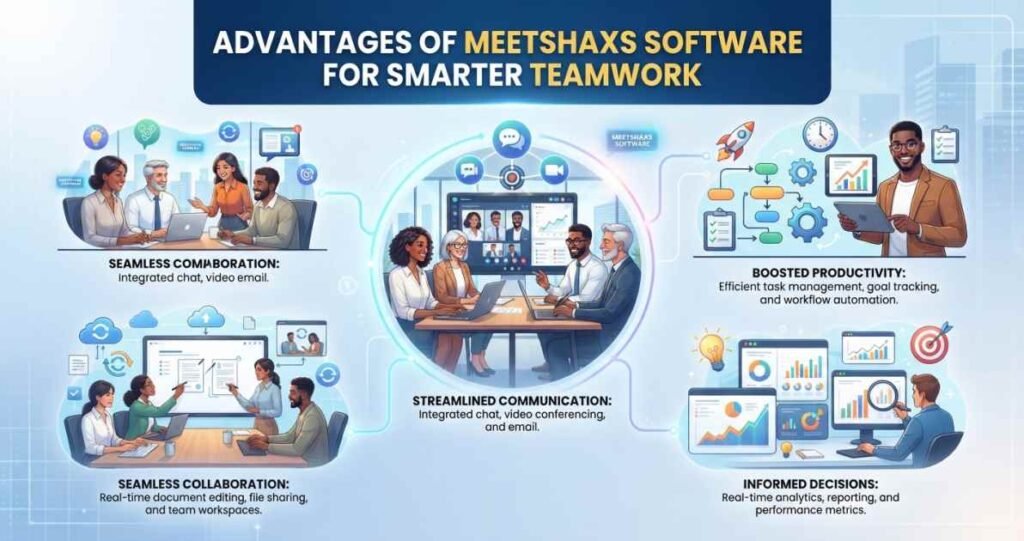
Meetshaxs is described as a collaboration and productivity platform for teams. It brings team chat, video meetings, task boards, and file sharing under one login. Instead of paying for and learning four or five separate tools, a team works from one shared space where conversations connect to tasks and files.
The Basic Idea
Most workplace tools solve one small problem. Meetshaxs aims to cover the whole daily routine in one place. Public descriptions usually list these core parts.
- Team messaging for quick questions and project updates
- Video conferencing for calls and check-ins
- Task and project boards with deadlines
- File storage and sharing in a shared cloud space
- Reports that show progress and workload
How a Typical Day Looks Inside the Platform
A normal workday on a platform like this often follows a simple pattern.
- A manager creates a project and breaks it into tasks.
- Every assignment is assigned to an individual and comes with a deadline.
- Team members discuss the work in chat linked to that project.
- A short video call settles anything that needs a live conversation.
- Files remain attached to the task, and progress is shown on the board.
Why Interest Keeps Rising
The trend in Meetshaxs software reflects a broader shift in how people work. Remote and hybrid schedules are now the norm, especially for American companies with staff in multiple states or countries. Subscription fatigue is real, too. Small teams want fewer bills, fewer logins, and fewer tools to teach new hires.
Search interest is not proof of quality, though. A rising trend tells you people are curious. It does not tell you that the product fits your team, so treat it as a reason to look more closely and nothing more.
Key Advantages of Meetshaxs Software at a Glance

Here is the short version. Every element is detailed in the subsequent sections.
Quick Summary Table
| Advantage | What It Means in Practice | Who Feels It Most |
| One workspace | Chat, calls, tasks, and files under one login | Small and growing teams |
| Clear communication | Messages linked to projects and tasks | Remote and hybrid teams |
| Simple task tracking | Owners, deadlines, and progress in one view | Project managers |
| Built-in reports | Data on progress and workload | Team leads and owners |
| Integrations | Connections to email, calendar, and business tools | Teams with an existing tech stack |
| Device access | Work from desktop or mobile | Distributed teams |
| Room to grow | Add people without switching platforms | Startups and agencies |
Which Advantage Matters Most
The answer depends on your biggest daily headache. Use this quick guide.
- If your pain is from too many apps, focus on the single workspace.
- If your pain is missed deadlines, focus on task tracking.
- If your pain is guessing where projects stand, focus on reports.
- If your pain is disconnected tools, focus on integrations.
One Workspace Instead of Many Separate Apps
This is the advantage almost every description leads with, and for good reason. A typical team runs one app for chat, another for calls, another for tasks, another for files, and email on top of everything. Each app has its own login, notifications, and habits. Switching between them drains attention all day long.
The Cost of App Overload
I have seen teams lose half a morning hunting for the latest version of a file or the message where a decision was made. Common signs of app overload include the following.
- Scattered messages across several tools
- Duplicated files with unclear versions
- Missed deadlines because a task lived in someone’s inbox
- Repeated logins and constant notification noise
- A growing pile of monthly subscription bills
What Changes With a Single Login
When chat, tasks, and files live together, context stays attached to the work. A question about a deadline sits next to the task itself. A shared document sits inside the project it belongs to. New hires learn one system instead of five, which shortens onboarding.
Time and Money Savings to Expect
Savings depend on what you pay for today. Add up your current subscriptions for messaging, meetings, project tracking, and storage. Compare that total with the Meetshaxs plan you would need. If the number drops and your team still gets the features it uses, the switch makes sense. If your existing tools are cheap or free, the savings may be small, and the real gain is simplicity.
Faster and Clearer Team Communication
Good communication is less about speed and more about clarity. Fast replies that lack context still cause confusion. A combined workspace helps because messages connect to the work they discuss.
Chat Tied to Work
In a standalone chat app, important decisions get buried under jokes and general noise. When conversations attach to projects and tasks, anyone can open a task and see the full story. That saves the awkward question of what was decided last week.
Video Meetings That Lead to Action
Meetings often end with good intentions and no follow-through. Built-in video calls help by putting action items straight into the task board after the call. No one relies on an individual to recall and document notes.
Habits for Cleaner Communication
Software alone does not fix messy communication. A few simple habits make a big difference.
- Keep one channel per project so topics stay separate
- Put decisions in the task, not only in chat
- Use calls for complex topics and chat for quick updates
- Set clear response expectations for urgent and normal messages
- Close channels when a project ends
Simple Task and Project Tracking
Task tracking is where a collaboration platform earns its place. A tool that only offers chat leaves managers guessing. Task boards show the same view to everyone.
Assigning Work and Setting Deadlines
Every task needs three things: an owner, a due date, and a clear description. When those are visible to the whole team, fewer things slip through the cracks. Milestones help larger projects stay on schedule by breaking big goals into smaller checkpoints.
The Manager View
Managers benefit because task status and communication appear side by side. Instead of piecing together an update from a spreadsheet, a calendar, and a chat thread, one dashboard shows what is done, what is late, and who is overloaded.
A Simple Weekly Routine
Here is a routine that works with almost any task board.
- On Monday, review open tasks and set weekly priorities.
- Midweek, check overdue items and remove blockers.
- On Friday, close finished tasks and note what carries over.
- Once a month, look at patterns in what gets delayed.
Built-in Analytics and Progress Reports
Reports turn daily activity into information a manager can use. Many tools show activity, like messages sent or files uploaded. Activity is easy to count and often meaningless. Outcome data, such as work finished on time, tells a more honest story.
Activity Data and Outcome Data
Activity data answers the question of how busy people are. Outcome data answers the question of whether the work is getting done. A platform that leans toward outcomes provides leaders with better evidence for deciding how to allocate time and budget.
Metrics Worth Watching
- Share of tasks finished on time
- Average time to complete a task
- Number of overdue items per project
- Workload per team member
- Progress against project milestones
Using Reports Without Micromanaging
Reports only help when people act on them, and that point stayed with me after reviewing how teams use dashboards. Share the numbers with the team, not just with managers. When people see their own progress, the data becomes motivating instead of intrusive. Use reports to spot bottlenecks early, and avoid using them to police every hour of someone’s day.
Integrations With the Tools You Already Use
Few teams start from zero. Most already rely on email, a calendar, a customer database, or accounting software. A collaboration platform that ignores these tools creates extra work. Good integration means information moves between systems without anyone having to copy and paste.
Common Connections
- Email and calendar apps
- Customer relationship management systems
- Cloud storage services
- Accounting and invoicing tools
- Developer and design tools
What Good Integration Looks Like
When integration works well, customer details appear inside a project without retyping. Action items from a meeting sync to the task board. Calendar events match project deadlines. Some descriptions mention an API for custom connections, which matters if your business has unusual needs. Confirm exactly which connections are supported before you rely on any of them.
Questions to Ask Before Connecting
- Is my current tool on the supported list, and how deep is the connection?
- Does data sync both ways or only one way?
- Is a developer needed to set it up?
- What happens to the data that’s been synced if I decide to cancel?
Who Benefits Most From Meetshaxs Software
Software works best when it matches a real need. The advantages of Meetshaxs software are most evident for teams that feel scattered.
Best Fit Teams
- Startups and small businesses that want one affordable system
- Remote and hybrid teams spread across time zones
- Project managers who track many moving parts
- Agencies and freelancers who juggle several clients
- Growing companies that want to avoid switching tools later
Fit Guide Table
| Team Type | Main Benefit | What to Check First |
| Startup | One tool instead of several | Pricing as headcount grows |
| Remote team | Shared view of work across locations | Mobile access and call quality |
| Agency | Client work organized by project | Client access and permissions |
| Project manager | Status and communication together | Report depth and export options |
| Freelancer | Simple task and file tracking | Whether a lighter tool is enough |
Who May Want Something Else
Large enterprises with strict compliance rules may need specialized software for regulated data. Teams built around one deeply customized tool, such as a heavy engineering platform or a dedicated sales system, may prefer to keep it and add Meetshaxs only where it helps. A solo worker with simple needs may find a lighter option easier and cheaper.
Limitations and Things to Check Before You Commit
An honest article should say what is missing, and a lot is still unclear here. Careful buyers ask questions first.
Limited Independent Information
Public information about Meetshaxs remains limited. Detailed reviews from independent sources are scarce, and many descriptions repeat similar points. Treat marketing claims as claims. Confirm features, pricing, and support terms through official channels before making decisions for your business.
Checklist Before Buying
- List the features that your team uses on a daily basis.
- Confirm each feature exists and works as described
- Get clear pricing, including any limits on users or storage
- Ask about onboarding time and training help
- Check the quality and hours of customer support
- Test the mobile experience, not just the desktop version
Security and Privacy Questions
- Where is the data stored, and who can access it?
- Is data encrypted while stored and while moving
- Are there role-based permissions for sensitive files
- Can you export your data if you leave
- Does the platform meet the standards your industry requires
Start With a Trial
I would not sign a yearly plan before running a small pilot. Pick one project and a handful of people, then use the platform for a few weeks. Ask the group what saved time and what got in the way. Real usage reveals more than any feature list.
Final Thoughts on the Advantages of Meetshaxs Software
The advantages of Meetshaxs software center on simplicity. One workspace, clearer communication, straightforward task tracking, useful reports, and connections to existing tools all point toward less friction in the daily routine. The rising trend in Meetshaxs software shows genuine curiosity, but that curiosity should be followed by careful testing.
Start small, ask direct questions about pricing and security, and let a short pilot decide. If your team finishes work faster and argues less about where information lives, you have your answer.
Frequently Asked Questions About the Advantages of Meetshaxs Software
What are the main advantages of Meetshaxs software?
The main advantages include a single workspace for chat, meetings, tasks, and files; clearer communication; simple task tracking; built-in reports; and potential savings from fewer subscriptions.
Is Meetshaxs software good for small teams?
It can be, especially for small teams that want one affordable system instead of several tools. Check pricing as your headcount grows to keep costs predictable.
Can Meetshaxs replace my current tools?
It may replace several, such as separate chat, task, and file apps. Specialized tools for accounting, sales, or engineering may still be needed, and integrations can connect them.
Is Meetshaxs software secure?
Security should be confirmed directly. Ask about encryption, permissions, data storage, and compliance before storing sensitive information.
Does Meetshaxs work for remote teams?
Public descriptions position it for remote and hybrid teams, with cross-device access and shared task views. Test call quality and mobile use during a trial.
How much does Meetshaxs software cost?
Pricing can change, so check the official source for current plans. Compare the total with what you pay now for separate tools.