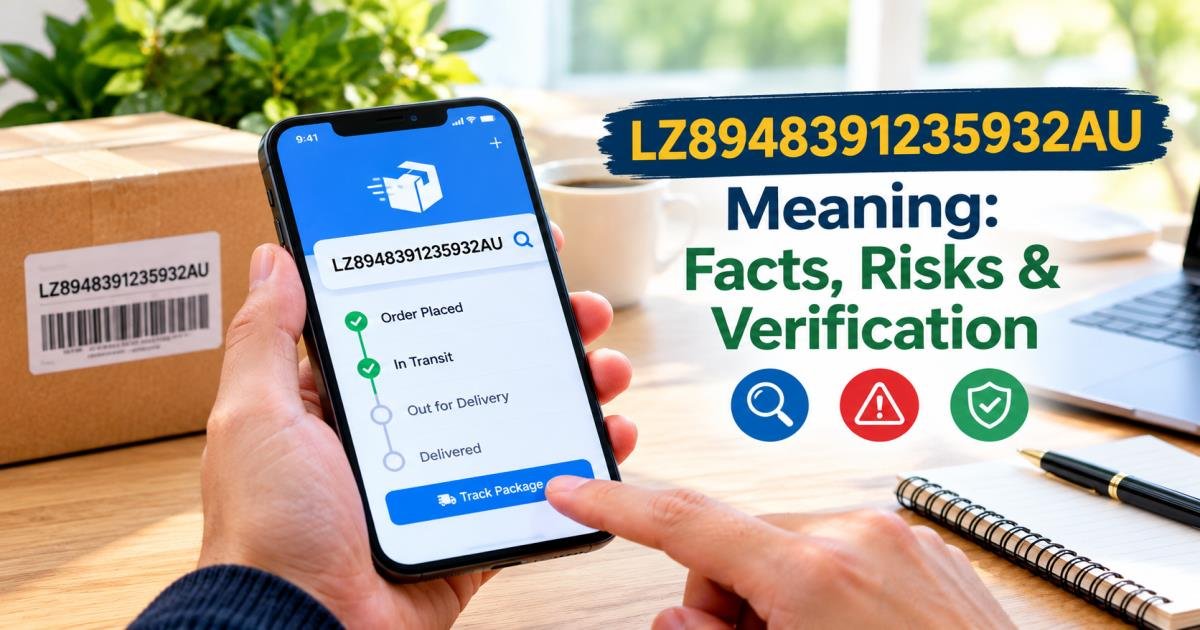

Lz8948391235932au is an alphanumeric string that shows up in order messages, emails, and search results as a possible parcel tracking reference. Its owner, current status, and carrier cannot be confirmed independently without the original order details or an official carrier record. People look up this code because they received it unexpectedly and want to know whether it points to a real shipment, how to check it, and whether it carries any risk.
This guide walks through the structure of the code, the practical steps for verification, common problems that stop tracking from working, and the warning signs of fake delivery messages. Every recommendation comes from patterns seen across real shipping notifications and known scam tactics that use similar-looking strings.
What Is Lz8948391235932au?
Lz8948391235932au is a 17-character mix of letters and numbers. It resembles the identifiers carriers assign so packages can be scanned as they move through sorting centers, border checks, and local delivery networks. Shoppers in the United States and other countries regularly receive codes of this type when they buy from overseas sellers.
Why This Alphanumeric Code Has Attracted Attention
Shoppers notice the string because it ends with AU and begins with LZ. Both elements appear in real postal systems, so the code feels familiar. At the same time, the overall length differs from the most common international format, which leaves people unsure whether they are looking at a genuine tracking number or something else. Search interest rises whenever a new batch of similar codes appears in inboxes or account pages.
Is It a Tracking Number, Order Reference, or Unknown Identifier?
It could be any of the three. Legitimate carriers issue unique codes so each package stays distinct. Some online stores create their own temporary references before a carrier takes the item. Without a matching order confirmation or a live record on an official carrier site, the safest approach is to treat the string as unverified until proven otherwise.
What Can Be Confirmed About the Code?
The characters themselves follow a clear pattern: two letters, a long run of digits, and two more letters. Public carrier databases and postal standards do not show a verified, active shipment tied exclusively to this exact combination. Any claim that the code belongs to a particular package requires evidence from the seller or the carrier’s own system.
Lz8948391235932au Meaning: Breaking Down the Code
Looking at each section of the string explains both why it looks official and why it raises questions.
What the “LZ” Prefix May Suggest
In international postal systems the first two letters often signal the type of service. The letter L appears in categories linked to letter-post items and certain tracked small packets. The second letter narrows the service further. Some networks have used LZ-style prefixes for tracked letter-post traffic. A prefix by itself never proves that any specific string was issued by a real carrier or that a package exists.
Understanding the Numeric Sequence
The middle digits act as a unique serial in genuine systems. Carriers generate them so no two active items share the same number for a set period. The numeric run in this string is longer than the nine digits used in the classic international postal format (eight serial digits plus one check digit). That difference is one of the clearest structural points that sets the code apart from many standard tracking numbers.
What “AU” Means and What It Does Not Prove
AU is the two-letter country code for Australia. In genuine international identifiers the final letters usually show the country of the postal operator that issued the number. Seeing AU therefore points toward a possible link with Australia Post or a partner network that uses Australian labeling. It does not prove the package started in Australia, sits in Australia now, or will be delivered by Australia Post. Only scan events or seller documentation can settle those questions.

How to Verify Lz8948391235932au Safely
Start with sources you already trust rather than with links that arrive in unexpected messages.
Check Your Original Order Confirmation
Open the email or account page that confirmed the purchase. Look for the same string or any other reference the seller supplied. Note the seller name, order date, and any additional numbers. If the code appears only in a separate message that has no matching order, treat it with extra caution.
Ask the Seller for the Official Courier Name
Contact the merchant through the same channel you used for the purchase. Request the full tracking number as the carrier issued it and the name of the company handling the shipment. Reliable sellers answer quickly. Do not click new links they send; open the carrier’s official site yourself.
Search the Courier’s Official Tracking Website
Once you know the carrier, type the official website address into your browser or use a saved bookmark. Enter the code exactly as written. Official carrier pages display public tracking information without asking for login details or payment first.
Is Lz8948391235932au a Scam?
The string itself is not automatically fake, yet the messages that carry it can be. Delivery scams succeed because tracking numbers look official and create a sense of urgency.
Warning Signs of Fake Parcel Notifications
Messages that claim a package is stuck, delayed, or needs immediate action often use invented or recycled codes. Generic greetings, spelling mistakes, and pressure to respond within hours are frequent clues. Real carriers rarely demand sudden payment or personal data through unsolicited channels.
Unexpected Delivery Fees and Redelivery Requests
Scammers invent reasons why a package cannot move forward without an extra fee. Legitimate carriers collect any duties or fees through clear, documented processes. Requests to pay with gift cards, cryptocurrency, or unusual apps almost always signal trouble.
Suspicious Links, Fake Websites, and Requests for Personal Data
Links in scam messages lead to pages that copy the look of real carrier sites. Those pages may ask for passwords, card numbers, or identity details. Always type the official carrier address yourself. Never enter account credentials or payment information on a page reached through an unexpected tracking notice.
What to Do If You Received This Code in a Message
The arrival method changes the first steps only slightly. The core rule stays the same: verify on your own.
If It Arrived by Email or Text Message
Leave the links alone and do not reply with personal information. Search your order history or contact the merchant through the original shopping platform. When no matching order exists, the message can usually be ignored or reported as spam.
If It Appears in an Online Shopping Account
Log in through the official app or website, not through any link in a notification. Review the order details and any shipping updates the platform already shows. If the code does not match information already in the account, reach the platform’s support through official channels.
If You Have Already Clicked a Suspicious Link
Close the page at once. Run a security check on the device if the tools are available. Change passwords for email and financial accounts that may have been open on the same device. Watch bank and card statements and report any unauthorized charges right away.
Why Lz8948391235932au Tracking May Not Work
Even real tracking numbers sometimes return empty results. Several everyday reasons explain the gap.
Incorrect or Incomplete Reference Numbers
One wrong character stops a match. Copying and pasting reduces mistakes, yet some systems still need the number entered exactly as the carrier issued it, including any spaces that appear on the original label.
Delayed Carrier Registration or Tracking Updates
Sellers often create a label days before the package reaches the carrier. The first scan can take one to several business days to appear. International routes, customs checks, and busy seasons add further delays.
A Merchant Reference That Is Not a Carrier Tracking Number
Some stores generate internal codes that look like tracking numbers. Those codes work only inside the store’s system and produce no results on carrier sites. Asking the seller to clarify the difference usually solves the confusion.
How to Protect Yourself From Parcel Tracking Scams
A few steady habits cut the risk sharply.
Verify Delivery Messages Independently
Never trust a message that arrives without warning. Cross-check it against the original order confirmation and open official carrier sites yourself.
Never Share Passwords or Payment Details Through Suspicious Links
Real carriers and merchants do not ask for account passwords or full card details simply to release a package already in transit. Any such request is almost certainly fraudulent.
Save Order Records and Shipping Communications
Keep confirmation emails, order numbers, and any tracking information supplied at purchase. These records make it easy to separate genuine updates from fabricated ones and support claims if problems arise.
What to Do if You Lose Money to a Delivery Scam
Contact the bank or payment service at once and report the transaction. Ask about a dispute or chargeback where the rules allow it. Report the incident to consumer protection authorities and, if relevant, to the platform where the purchase took place. Keep every related message and screenshot.
Final Verdict:
Lz8948391235932au is an alphanumeric string that looks like an international tracking code yet differs in length from the classic 13-character format used by many national postal operators. The LZ prefix and AU ending invite links to tracked letter-post services and Australia, but neither element alone proves origin, carrier, or legitimacy. No public record confirms an active, verifiable shipment uniquely tied to this exact code.
Anyone who has received the string should return to the original order source, confirm the carrier with the seller, and check only official websites entered by hand. Treat unsolicited requests for payment or personal data as potential scams. Careful verification protects both time and money more effectively than repeated searches for the same unexplained code.
Frequently Asked Questions About Lz8948391235932au
What does Lz8948391235932au mean?
It is an alphanumeric string that appears in some shipping messages and online discussions. It may serve as a tracking reference, a merchant code, or an unverified identifier. Its exact meaning depends on the context in which it was issued and cannot be settled from the characters alone.
Is Lz8948391235932au a real tracking number?
It has not been independently confirmed as an active, valid tracking number for a specific shipment. Structural differences from the standard international postal format leave questions that only official carrier records or seller confirmation can answer.
Does Lz8948391235932au belong to Australia Post?
No public confirmation shows that Australia Post issued or is currently tracking this exact string. The AU ending matches Australian country coding in some systems, yet the overall length and digit count do not match the most common format used for international items handled by Australia Post.
Does “AU” mean a package came from Australia?
In genuine international identifiers the final two letters usually identify the country of the postal operator that issued the number. They do not automatically prove the physical origin of the contents or the current location of any package. Confirmation requires tracking events or documentation from the sender.
Can I track Lz8948391235932au online?
You can enter the string on official carrier tracking pages or multi-carrier tools, but results are not guaranteed. If no matching record appears, contact the seller who supplied the code and request the official carrier name plus any alternative reference numbers.