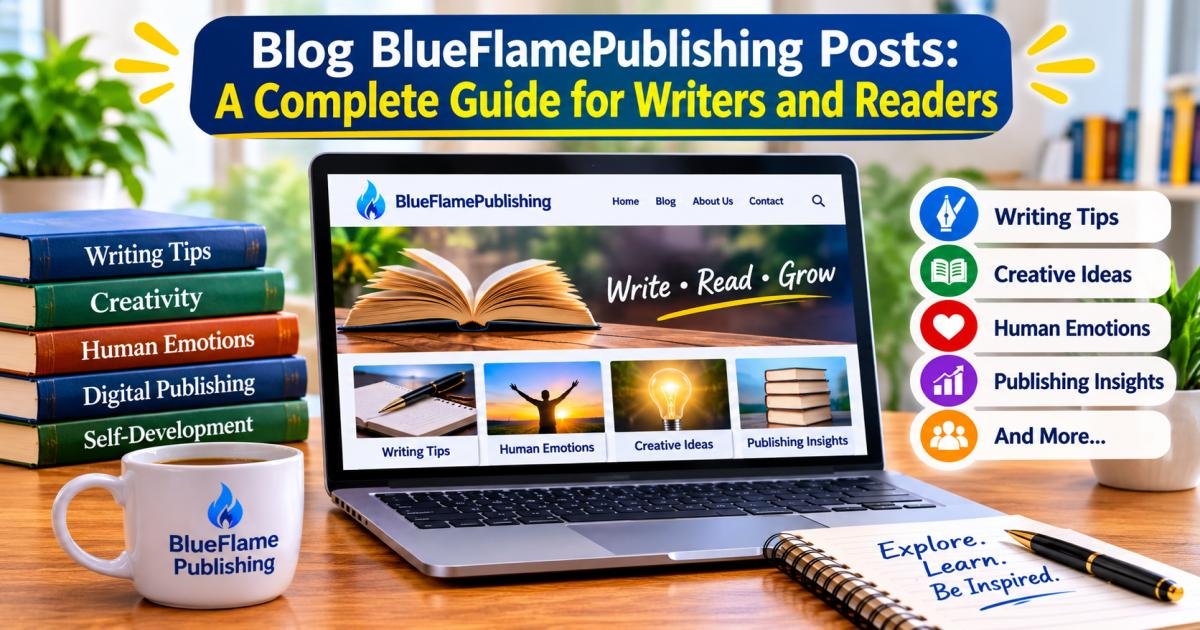

Blog BlueFlamePublishing posts are the articles in the blog section of BlueFlamePublishing.org. The site publishes them on writing, blogging, self-publishing, marketing, and technology. Most stay at a beginner level. Treat them as a starting point, not a final authority.
Here is why. The site shows no founding date, and readers cannot check the credentials of the people who write or edit the posts. So this guide gives you a quick tool to judge any article yourself: the Who, When, Source check. You will also learn what the blog covers, who benefits most, and how to write a post that earns trust.
What Are Blog BlueFlamePublishing Posts?
Blog BlueFlamePublishing posts are the articles filed under the blog on BlueFlamePublishing.org. The phrase comes from the site’s About page, and the site also keeps a category with the same title. It does not refer to a separate product or app.
The About page calls the site a home for people who enjoy writing, reading, and thinking, and says it aims to connect writers and readers. One post on the site goes further. It says writers and businesses can publish their own articles there, and that the site turns down duplicate or low-quality content. Treat both statements as the site’s own claims, not proof.
Check the web address before you read or share anything. Search results for the brand show look-alike domains, such as blueflamepublishing.net and blueflamepublishing. blog, and nothing confirms that they share an owner or editorial standards with the .org site.
Exploring the Main Topics Covered on BlueFlamePublishing
The blog covers blogging, writing and creativity, self-publishing, marketing and online growth, general business, and technology and AI.
Writing blog posts on BlueFlamePublishing focuses on habits and getting started. The beginner posts on writing habits and starting a blog suit new bloggers. Self-publishing posts follow a book after the draft is done, including editing, formatting, distribution, cover design, and marketing. The homepage has also featured AI material, including a 2026 article about AI marketing books.
Picture a first-time author. On Monday she reads a post on writing habits. On Wednesday she reads one on cover design. On Friday she reads one on book marketing. In one week she covers the path from draft to launch, though only at an introductory level.
Because the topics vary this much, judge each article on its own. A strong post on blogging habits tells you nothing about the quality of a post on AI tools.
Why Writers and Readers Explore Blog BlueFlamePublishing Posts
Readers search for the content, not the company. They typically want recent posts, a blog archive, or plain-language tips. People often add words like posts, blog, articles, or updates because they remember the name only in part. One keyword tracker shows its own page ranking ninth for “blog blueflamepublishing posts,” a phrase with a listed search volume of about 14K.
Intent differs from one search to the next. Someone who types “writer blog blueflamepublishing posts” usually wants tips for their own work. A reader who types “articles blog blueflamepublishing posts” is more likely to want a list of recent pieces. Others want a simple answer: is this blog active and worth my time?
On activity, one review found homepage posts dated August 7, 10, 19, and 24, 2026. That shows steady publishing at the time. It says nothing about quality.
How Writers Can Benefit from BlueFlamePublishing Blog Articles
New writers gain the most. They get a gentle introduction to writing habits, blogging basics, and the steps of self-publishing, without technical jargon. Experienced writers will find the posts too basic for craft or contract questions.
You can also study how each post is built. Notice where the answer appears, how the headings guide you, and how long the paragraphs run. Then copy the moves, not the words. If a post opens with the answer in two sentences, try that structure in your next draft.
Some writers find a publishing chance, too. One post on the site says writers can publish their own articles there. Before you send anything, ask for the terms in writing: who owns the article, whether you get a byline, and whether you can link to your own site.
Run the Who, When, Source check on any advice before you act on it. A tip about book distribution from several years ago may no longer match how platforms work.
The Role of Human Emotions in BlueFlamePublishing Posts
No dedicated emotions section appeared in the sources reviewed for this guide. Emotion runs through the writing advice instead. A search for “human emotions blog blueflamepublishing posts” will not lead you to a separate category.
That makes sense, because most writing advice touches feelings. Beginners typically wrestle with doubt before they publish, nerves when they share a first draft, and pride when they finish a chapter. Posts that name those moments connect with readers who have lived them.
Writers can use the same idea. Name the feeling in plain words, then add one concrete detail. “Her hands shook as she pressed send” shows more than “she felt extremely nervous.” If your reader scans a post about self-publishing costs, the feeling is worry about money, so address the price in the first paragraph.
Before you write, ask one question: what is my reader worried about? Then answer that worry early.
How to Find and Explore BlueFlamePublishing Articles
Go straight to blueflamepublishing.org, open the blog, and browse the category titled “blog blueflamepublishing posts.” Then sort by topic and check each date. Marketing and AI advice can go stale within months, so older posts deserve extra care.
Many people shorten the name to “blueflame blog.” Others type “blueflame blog blueflamepublishing posts” or “articles blog blueflamepublishing posts” into Google. These searches work, but they can return look-alike domains. Add the site name, or search for site:blueflamepublishing.org writing habits, to stay on the official domain. When a post is worth keeping, bookmark it and write the date next to it.
Then apply the Who, When, Source check. For example, a post dated April 9, 2026 carries only the byline “admin,” which gives you no author to check. That does not make the post wrong. It means you should confirm its advice elsewhere.
How to Write High-Quality Blog BlueFlamePublishing Posts
Start with a real question, answer it in the first two sentences, and add something only you can offer.
Google says its ranking systems prioritize helpful, reliable information that benefits people rather than content made to manipulate rankings. It also tells creators to consider the “who, how, and why” of their content.
Put that into practice in four steps. First, write short sentences and explain any technical term once. Second, add a real example to every section. For a post about self-publishing costs, name an actual cost, such as editing or cover design, and tell readers how to get quotes. Third, check every fact and link to the source. Fourth, read the draft aloud and cut every sentence you stumble over.
Add a byline and a short bio, too. A named author with a visible background answers the “Who” question before your reader asks it. Let the question set the length, not a word-count goal. A tight 1,000 words typically beats a padded 2,000.
Search Strategies for Creating Valuable BlueFlamePublishing Articles
Match the reader’s search intent, place the main phrase where it reads naturally, and write a clear page description. Decide whether your post helps people find the blog, learn from it, or judge it, then answer that need.
Put blog blueflamepublishing posts in the title, the introduction, and one or two headings. In the rest of the text, use variations such as “the blueflamepublishing blog” and “BlueFlamePublishing articles.”
Write a meta description that summarizes the page honestly. Google sets no length limit but trims snippets to fit the device width, so aim for roughly 150 to 160 characters, which typically fits. Google sometimes uses the meta description when it describes the page better than the page text does. Add internal links between related posts, alt text on images, and test the page on a phone.
Avoid keyword stuffing. One review noted that several of the site’s own articles repeat these phrases many times, which suggests the wording targets search terms. Repetition wears readers out. A phrase that appears eight times in one paragraph reads like a sign, not a sentence. Google says search-focused work helps when it supports content written for people. Update old posts when facts change, and note the update date.
How to Evaluate the Quality and Credibility of Blog Posts
Use the Who, When, Source check. Who wrote the post? When did they publish or update it? What sources back the claims? Three quick answers tell you most of what you need.
For “Who,” look for a named author with a visible background. For “When,” look for a publication or update date, and treat older advice on marketing, tools, or platform rules with caution. For “Source,” look for links to primary or official pages. For an ISBN question, check your country’s ISBN agency. For taxes, check your tax authority. For distribution rules, read the platform’s own help pages.
Add three more signals. Do the claims name specifics, or do they only promise results? Does the text read naturally, or does it repeat a keyword in every line? Does the post disclose paid or sponsored content?
Apply the check to BlueFlamePublishing. The site shows no founding date, and readers cannot verify the writers’ credentials. That is a reason to treat the posts as ideas and orientation. For anything that affects your money or rights, such as publishing contracts, ISBNs, or taxes, confirm the details with an official or professional source.
Common Mistakes to Avoid When Exploring or Writing Blog Posts
The biggest mistakes are reading without a goal, trusting without checking, and copying what already ranks.
Readers often bookmark thirty posts and apply none. Pick one problem, such as finishing a first draft, and read only the posts that solve it. Many readers also skip the date. A marketing tip from several years ago can fail on current platforms.
Writers make their own errors. Some copy the structure of top-ranking pages and end up with the same thin content, and several guides on this topic repeat the same list of categories. Others stuff keywords, promise guaranteed results, or publish without an edit. A quick Who, When, Source check before you hit publish catches many of these.
What Makes a Blog Post Valuable for Modern Readers?
A valuable post answers one clear question, stays current, and shows its sources.
Four traits matter. It is clear, so the reader finds the answer in seconds. It is current, so the date and facts match reality. It is backed, so it names sources and shows real experience, such as a worked example. It is original, so it adds something the top results lack. “Edit more” is weak advice. “Read your draft aloud, then cut every sentence you stumble on” gives the reader an action.
Final Thoughts
Blog BlueFlamePublishing posts work best as a beginner-friendly starting point. They give new writers ideas on habits, blogging, and self-publishing, and they give curious readers a quick overview. The site shows no founding date and no verifiable author credentials, so run the Who, When, Source check before you act, and confirm big decisions with official sources. Read the blog with one clear question in mind, take what helps, and verify the rest.
FAQs
What Is Blog BlueFlamePublishing?
Blog BlueFlamePublishing is the blog section of BlueFlamePublishing.org. It publishes beginner-level articles on blogging, writing, self-publishing, marketing, and technology. The name comes from the site’s own About page, not from a separate product.
Are BlueFlamePublishing Posts Useful for New Writers?
Yes, as an introduction. They focus on writing habits and starting a blog, and they stay at a beginner level. Experienced writers will want deeper sources for contracts and distribution. Every reader should run the Who, When, Source check before acting on advice.
Can Readers Find Articles About Human Emotions?
No dedicated emotions section appeared in the sources reviewed. Emotional themes, such as doubt before publishing or pride in finishing a draft, show up inside the writing advice. Browse the writing posts and look for those themes instead of searching for a separate category.
How Can I Find the Latest BlueFlamePublishing Posts?
Open the blog on blueflamepublishing.org, check the dates on the homepage, and browse the “blog blueflamepublishing posts” category. Confirm the address first, because look-alike domains exist.
How Can Writers Improve Their Articles?
Answer the reader’s main question in the first two sentences. Use plain words, add one real example per section, check every fact, and read the draft aloud before you publish. Add a byline and a short bio so readers can see who wrote it.
What Should Readers Check Before Trusting a Blog Post?
Use the Who, When, Source check: a named author, a recent date, and links to reliable sources. Then look for specific claims, clear disclosure of paid content, and writing that reads naturally instead of repeating one phrase.
Is BlueFlamePublishing Suitable for International Readers?
The topics are general, so readers in the USA and elsewhere can use them. Rules for taxes, ISBNs, and book distribution differ by country, so confirm those details with your local authority or platform.