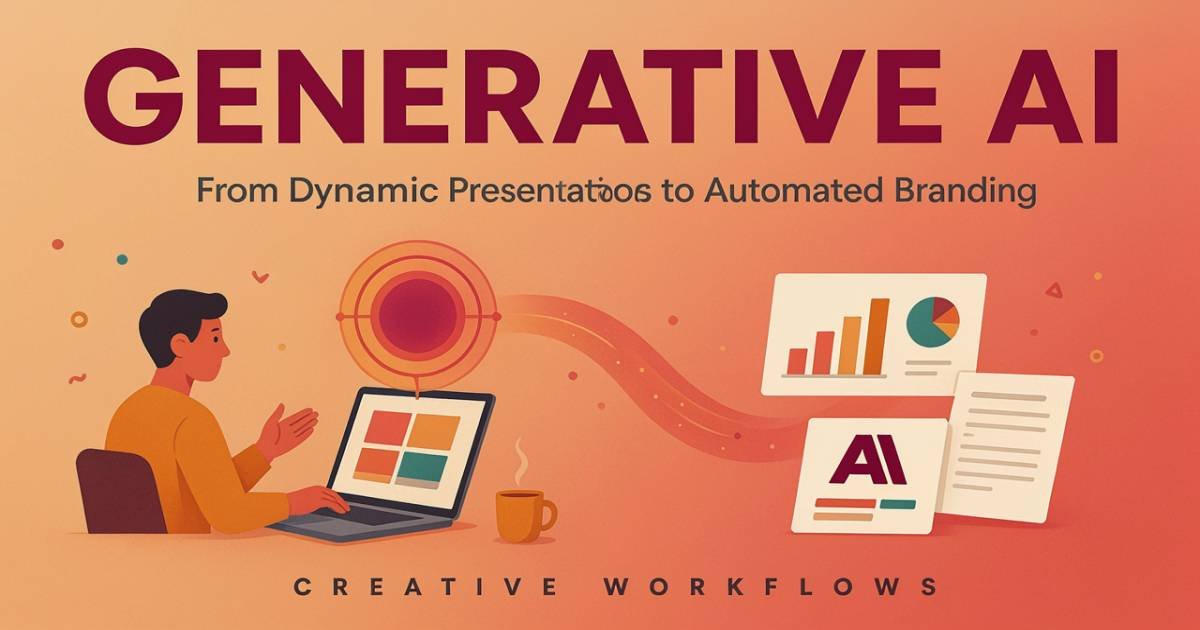

The global creator economy and remote workforce are undergoing a quiet yet profound structural transformation. For over a decade, digital production required a distinct bifurcation of skills: high-level strategic ideation on one end, and labor-intensive technical design execution on the other. Producing a slick investor pitch deck, establishing a multi-channel brand identity, or publishing high-frequency visual collateral typically meant hiring specialized agencies or spending dozens of hours tweaking design software.
Today, generative artificial intelligence has dissolved that barrier. AI is no longer merely an experimental novelty generating surreal artwork or entertaining text prompts; it has matured into foundational workflow infrastructure. Modern remote teams, independent consultants, and digital entrepreneurs are using generative AI tools to automate branding, accelerate asset creation, and turn complex ideas into polished visual narratives in fractions of the time previously required.
Understanding how generative AI reshapes creative operations is essential not only for optimizing productivity, but also for navigating a broader economic shift: the movement of digital creators toward sovereign, sustainable, and platform-independent business models.
1. The Sovereign Creator Era: Why Business Models Are Shifting
To understand why high-velocity, professional design tools are becoming essential for modern creators, we must first examine the shifting mechanics of the digital economy.
For years, the default pathway for online creators was building an audience on public, algorithm-driven social feeds like YouTube, TikTok, and Instagram. However, reliance on algorithmic distribution has exposed creators to severe systemic vulnerabilities:
- Platform Volatility: Algorithmic recalibrations can destroy organic reach overnight, severely diminishing audience access without warning.
- Revenue Insecurity: Ad-share monetization models leave creators dependent on shifting platform policies, arbitrary demonetization, and fluctuating CPM rates.
- Lack of Audience Ownership: On public feeds, creators do not own their customer data, contact lists, or direct communication channels.
PUBLIC ALGORITHMIC FEEDS PRIVATE SOVEREIGN SANCTUARIES
+——————————–+ +——————————–+
| * Renting audience distribution| | * Direct subscription revenue |
| * Subject to algorithm shifts | =====> | * Self-hosted platforms & CMS |
| * Volatile ad-share revenue | | * Owned subscriber datasets |
| * High churn, low ownership | | * Premium, high-trust output |
+——————————–+ +——————————–+
In response, a growing wave of creators, educators, and boutique agencies are actively migrating off public social feeds into private, token-gated, or subscription-based sanctuaries—such as Substack, Patreon, private Discord communities, and custom member portals.
By trading fickle algorithmic reach for direct financial relationships, creators protect their revenue and build resilient digital businesses. However, operating an independent membership platform demands a higher standard of professionalism. Paying subscribers and private investors expect agency-grade visual communication, whether in the form of downloadable whitepapers, exclusive course modules, or high-stakes pitch decks.
2. Transforming Narrative into Visuals: AI-Powered Presentations
One of the most persistent bottlenecks in modern business communication is translating raw strategic concepts into visually compelling presentation decks. Whether securing seed funding, onboarding premium subscribers, or pitching a corporate sponsor, a poorly formatted pitch deck can compromise even the most brilliant business strategy.
Traditionally, drafting a 20-slide pitch presentation required hours spent aligning text frames, selecting color palettes, searching for royalty-free photography, and reformatting layouts across multiple screen ratios.
+———————————————————————–+
| THE AI PRESENTATION WORKFLOW |
+———————————————————————–+
| RAW STRATEGIC OUTLINE AI GENERATIVE ENGINE |
| * Key Bullet Points * Layout & Grid Logic |
| * Brand Color Guidelines –> * Typography Scaling –> POLISHED |
| * Core Value Prop * Asset Contextualization DECK |
+———————————————————————–+
Generative AI completely reimagines this process by shifting human effort from tedious manual layout adjustments to high-level story architecture. Leveraging a specialized AI presentation maker allows creators and distributed teams to transform simple text outlines or topic prompts into fully structured, professionally designed slide decks in minutes.
Rather than starting from a daunting blank canvas, creators receive intelligently formatted layouts complete with cohesive color theory, balanced typography hierarchies, and relevant graphic elements tailored to their specific industry context.
Key Operational Advantages of Generative Slide Design
- Rapid Narrative Iteration: Teams can test multiple pitch narratives or presentation structures in real time during internal strategy sessions without committing hours to manual design re-work.
- Context-Aware Visual Consistency: AI design engines automatically maintain font hierarchy, line spacing, and margin proportions across complex decks, eliminating formatting bugs.
- Accessible Design Democratization: Subject-matter experts, technical founders, and writers can deliver visual collateral that rivals high-end design agencies without possessing formal graphic design training.
3. Automated Branding: Building Scalable Visual Systems
Beyond individual presentation decks, generative AI is revolutionizing how brand identity systems are generated, maintained, and scaled across distributed teams.
In traditional workflows, maintaining visual consistency across multiple digital touchpoints required strict brand style guides, heavy asset management software, and constant oversight. When an independent creator or small team launches a new course, newsletter, or private membership tier, generating matching banners, thumbnail graphics, social teasers, and document templates often created immense operational friction.
Generative AI bridges this gap through automated design systems that dynamically adapt core visual identity rules across any medium:
+———————————————————————–+
| AUTOMATED BRAND ASSET PIPELINE |
+———————————————————————–+
| CORE BRAND RULES (Color Palette, Logos, Typography, Tone) |
| | |
| v |
| GENERATIVE ENGINE (Style Transfer & Pattern Matching) |
| | |
| +————————+————————+ |
| | | | |
| v v v |
| [ Investor Pitch Decks ] [ Course Workbooks ] [ Event Thumbnails ] |
+———————————————————————–+
- Instant Style Adaptation: Generative models apply color schemes, typography pairings, and logo placements automatically across diverse asset dimensions, ensuring brand recognition remains intact.
- Dynamic Asset Scaling: A single primary graphic can be instantly transformed into email header banners, digital PDF covers, or slide backgrounds without manual cropping or quality degradation.
- Localization and Personalization: Distributed remote teams can instantly customize visual deliverables for local markets or specific subscriber tiers while retaining global brand guidelines.
4. Elevating Business Durability: The Synergy of Speed and Sovereignty
The convergence of generative AI workflows and sovereign business models represents a fundamental shift in how digital enterprises operate.
When creators operate within algorithmic social platforms, they are trapped on a content treadmill: producing high-volume, ephemeral content designed to capture brief spikes in attention. Because attention on public feeds decays rapidly, spending days perfecting visual assets yields diminishing returns.
Conversely, when creators migrate to private, subscription-based environments, every piece of content becomes part of a long-term value archive. High-value presentation decks, detailed research reports, and exclusive video courses continue generating recurring subscription revenue for months or years after publication.
ALGORITHMIC CONTENT TREADMILL SOVEREIGN VALUE ARCHIVE
+—————————+ +—————————+
| * High volume, short life | | * High quality, evergreen |
| * Fast decay rate | =========> | * Cumulative recurring value|
| * Ephemeral attention | | * Premium subscriber trust|
| * Dependent on algorithms | | * Powered by AI velocity |
+—————————+ +—————————+
Integrating generative AI into this sovereign model provides creators with a decisive competitive edge:
- Lower Operational Overhead: Small teams can produce agency-level assets without maintaining heavy overhead or bloated contractor budgets, preserving profit margins.
- Faster Time-to-Market: Product launches, pitch rounds, and subscriber campaigns can move from initial concept to live deployment in days rather than weeks.
- Enhanced Subscriber Retention: Consistently delivering beautiful, professionally curated educational and visual content reinforces the perceived value of paid subscriptions, reducing subscriber churn.
Conclusion: The Strategic Advantage of AI-Augmented Workflows
Generative AI is far more than a tool for rapid content generation; it is a catalyst for creative autonomy. By relieving creators, founders, and remote teams of the manual burden of layout formatting, asset resizing, and deck creation, AI allows human talent to focus on what truly matters: deep strategic thinking, authentic community engagement, and compelling storytelling.
As the creator economy continues its steady migration toward independent, self-hosted, and token-gated platforms, mastery over efficient digital production tools becomes a critical strategic asset. Leveraging tools like an AI presentation maker to streamline visual narrative delivery ensures that your brand communicates with clarity, elegance, and authority across every subscriber touchpoint.
In the modern digital landscape, owning your platform is the foundation of financial independence—and mastering AI-driven workflows is the engine that keeps your brand moving forward.