
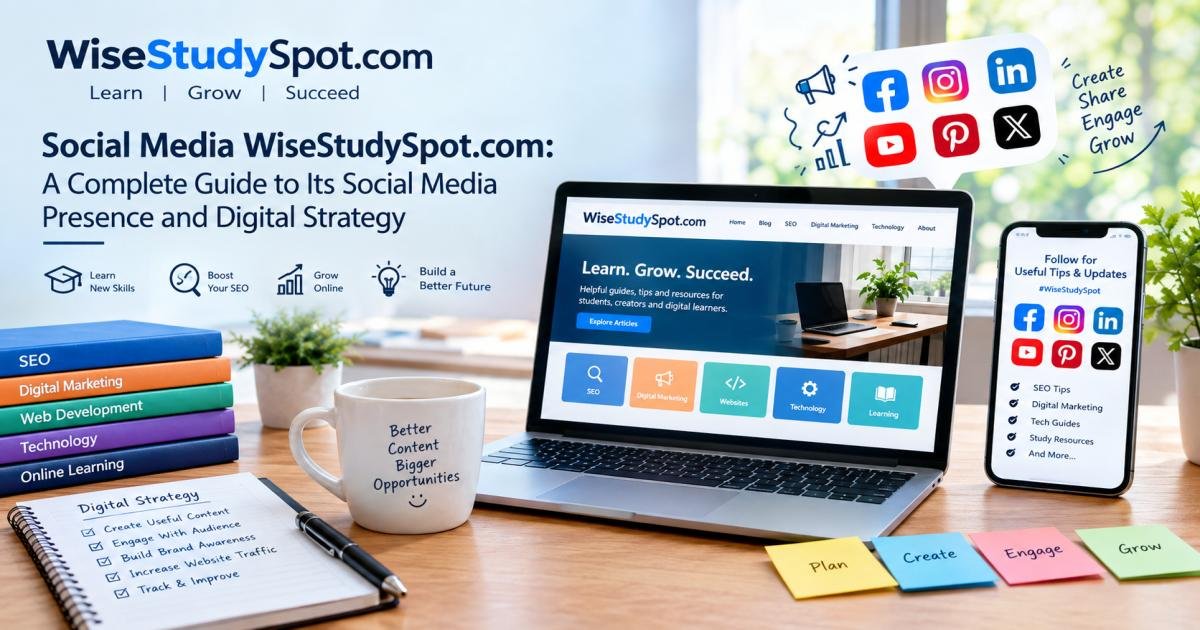

Social media WiseStudySpot.com refers to the social accounts and online activity connected to the website WiseStudySpot.com. People search this term to find the site’s real pages on platforms such as Facebook, Instagram, or YouTube, or to check whether a page claiming to represent WiseStudySpot is genuine.
At the time of writing, no verified, publicly listed set of official WiseStudySpot.com social accounts exists in any record I could find. So this guide does two things instead of guessing. First, it shows you how to find and confirm real accounts if they exist. Second, it breaks down what a strong, honest social media strategy looks like for a study-focused website like this one. Both sections use plain language and answer the actual questions people type into Google.
What Is Social Media WiseStudySpot.com?
Social media WiseStudySpot.com means the social media footprint of the website WiseStudySpot.com: its pages, posts, and activity on platforms such as Facebook, Instagram, YouTube, LinkedIn, Pinterest, and X.
Sites in the study-resource space typically use social platforms to share short lessons, post exam tips, and answer reader questions in real time. Someone searching this exact phrase is usually looking for one of three things: a link to the site’s real pages, proof that a certain account is genuine, or a general sense of how a small study website approaches social platforms.
Understanding WiseStudySpot.com and Its Digital Focus
WiseStudySpot.com sits in the study and education niche, based on its name and likely content focus. Sites in this space typically cover exam prep, study techniques, focus tools, and productivity advice for students.
A site in this niche usually needs three parts working together: useful articles on the website, strong search visibility, and active social channels. Social media acts as the connector. Without it, even a well-written article can sit unread for months.
Why Do People Search “Social Media WiseStudySpot .com”?
Most searches for this phrase come from one of four reasons.
- Trust-checking a new site. Readers who land on WiseStudySpot.com through search often check its social pages before trusting the content.
- Spotting fake accounts. Copycat profiles are common online, so people search this phrase to confirm which page is real.
- Studying the site as an example. Marketers and student bloggers sometimes look at smaller education sites to see how they handle social platforms.
- Research on niche website growth. Some searchers want to understand how small websites use social signals to support their visibility in search results.
Whatever the reason, the safest move is the same every time: check the official website first, then verify anything else against it.
WiseStudySpot.com’s Social Media Presence
The most reliable place to find a website’s real social accounts is the website itself. Most sites in this niche place their social links in the footer, the header, or on an About or Contact page. If WiseStudySpot.com has active accounts, that is where they should appear.
Which Social Media Platforms Matter Most for a Study Site?
For an education or study-tips website, six platforms typically carry the most weight:
- Facebook for community groups and article sharing
- Instagram for short study tips, quotes, and reels
- YouTube for tutorials and step-by-step explainers
- Pinterest for study guides and printable checklists
- LinkedIn for a more professional, research-based tone
- X for quick updates and short-form conversation
A site does not need all six. Study-focused brands typically pick two or three platforms where their readers already spend time and focus their effort there.
How Do You Confirm an Official WiseStudySpot Account?
Run a quick five-point check before trusting any account that claims to be WiseStudySpot:
- Does the account link directly to the WiseStudySpot.com domain?
- Does the bio, logo, and writing tone match the website?
- Is the account linked from the website itself, not just the other way around?
- Does the posting history look steady, not just a handful of recent posts?
- Does the username avoid random numbers or spelling changes?
If an account fails two or more of these checks, treat it as unverified.
How Social Media Supports a Website Like WiseStudySpot.com
Social platforms give a website five concrete benefits, each tied to a different part of growth.
Content Distribution
A single blog post can reach hundreds of new readers within hours through a well-timed social share, instead of waiting weeks for search traffic to build.
Audience Engagement
Comments and direct messages tell a website what readers actually want next. This feedback loop is typically faster and more direct than analytics data alone.
Brand Awareness
Regular posting keeps a website’s name visible to people who are not actively searching for it that day. Familiarity builds trust before a reader even clicks through.
Website Traffic
Every social post with a link works as a small entry point back to the site. A consistent posting schedule can turn into a steady, repeatable source of visitors.
Community Building
Study-related pages tend to attract readers who want accountability and encouragement, not just information. A responsive page keeps those readers coming back.
WiseStudySpot.com Social Media Content Strategy
A study-focused site has no shortage of content ideas. Here is what a practical content mix looks like.
Educational and How-To Content
Short posts that teach one clear idea, such as a memory technique or a way to plan a study block, typically perform better than long, general advice because they deliver value in seconds.
Search Visibility and Content Marketing Tips
Sharing simple tips on writing clear articles or answering reader questions directly can attract fellow bloggers and site owners, not just students.
Short-Form Video Content
A 30- to 60-second video, such as a three-step way to beat procrastination, fits naturally into Instagram Reels or YouTube Shorts.
Infographics and Visual Posts
A visual checklist, like five signs a reader needs a study break, is easy to save and share, which makes it a strong fit for Pinterest and Instagram.
Blog Content Promotion
One article can typically produce two or three separate social posts, each pulling a different quote or point to attract different readers.
Audience Questions and Discussions
A direct question, such as “What’s your biggest study distraction?”, invites comments and shows a site what to write about next.

Social Media Platforms and Their Best Uses
| Platform | Primary Purpose | Suitable Content |
| Community & reach | Articles, discussions | |
| Visual discovery | Reels, carousels | |
| Professional audience | Research and business insights | |
| YouTube | Education & discovery | Tutorials, explainers |
| Content discovery | Guides, infographics | |
| X | Conversation & updates | Tips, news, discussions |
Platform choice should follow the audience, not trends. A site aimed at college students typically gets more traction on Instagram and Pinterest than on LinkedIn.
How Social Media and Search Visibility Work Together
Social shares are not a direct search ranking factor, but they support search visibility in a real, measurable way. When a website shares content on social platforms, it typically sees more clicks, longer visit times, and a higher chance that other bloggers link to that content from their own sites. Search engines pick up on those signals, even if the social share itself is invisible to them.
There is also a trust effect. A reader who sees a website mentioned often on social platforms is more likely to click, stay, and return. That behavior longer visits and repeat traffic is exactly what search engines reward over time.
Building Trust Into a Social Media Strategy
Trust on social media comes from five specific habits, not a slogan.
Show Real Experience
Share an actual study routine, an actual result, or an actual mistake and what it taught you. A post built on a real attempt reads as more credible than generic advice.
Cite Reliable and Primary Sources
When a post shares a study tip based on research, link to the original study or a named source instead of repeating a claim with no backup.
Show Who Is Behind the Content
If a real person writes the posts, name them. A short bio or background note gives readers a reason to trust the advice.
Keep Information Accurate and Current
Study techniques and digital tools change. Reviewing older posts and updating anything outdated keeps a page useful instead of stale.
Disclose Claims and Affiliations Clearly
If a post includes a sponsored link or an affiliate product, saying so directly builds more trust than staying quiet about it.
How to Evaluate Information About WiseStudySpot.com
Use this five-step check before trusting any claim about a smaller or newer website, including WiseStudySpot.com:
- Visit the official website directly instead of relying only on search snippets.
- Look for an About page that names who runs the site.
- Check for a working contact email or contact form.
- Compare details across two or three independent sources.
- Treat big, unbacked promises as a warning sign.
This habit works for any website, not just this one.
Common Social Media Mistakes to Avoid
These five mistakes typically slow down growth for any website, including study-focused ones.
Keyword Stuffing
Repeating the same phrase in every caption feels unnatural to readers and typically lowers engagement instead of raising it.
Buying Followers or Engagement
Purchased followers do not read, click, or trust a brand. Real growth, even slow growth, outperforms fake numbers every time.
Posting Only Promotional Content
An account that only pushes clicks or sales, without ever teaching something first, typically loses followers within weeks.
Ignoring Audience Comments
A page that never replies feels unattended. Answering comments, even briefly, shows readers that a real person runs the account.
Making Unverified Claims
Sharing a “fact” without checking it first can quietly damage trust the moment a reader spots the mistake.
How to Build a Social Media Strategy Inspired by WiseStudySpot.com
Five steps cover most of what a study or education site needs to get started.
Step 1: Define the Target Audience
Know whether the content is written for high school students, college students, or lifelong learners. This decision shapes every post that follows.
Step 2: Choose the Right Platforms
Pick two or three platforms where the target audience already spends time, instead of trying to maintain a presence everywhere.
Step 3: Create Useful Content First
Lead with a post that teaches something small and useful. Promotion works better after value has already been given.
Step 4: Engage With the Community
Reply to comments and ask direct questions. Treat followers as people, not numbers on a dashboard.
Step 5: Track and Adjust Performance
Review results every few weeks and adjust the content plan based on what actually worked, not on guesses.
Key Social Media Metrics to Monitor
Six numbers typically tell a site owner most of what they need to know:
- Engagement rate — likes, comments, and shares compared to total followers
- Click-through rate — how many people click a link back to the website
- Follower growth — how steadily the audience grows over time
- Watch time — how long viewers stay on a video before leaving
- Website traffic from social — how many visitors arrive through social links
- Conversion rate — how many visitors take a next step, such as joining a newsletter
Tracking these six numbers regularly typically produces steadier growth than chasing follower counts alone.
Final Takeaway
A social media presence built on real value and honest communication typically outlasts one built on shortcuts. For a website like WiseStudySpot.com, or any study and education platform, the working formula stays the same: share content that actually helps, respond to readers like real people, keep information accurate, and post consistently. That combination, not fake followers or empty claims, is what turns a small website into a name people trust.
FAQs
What does social media WiseStudySpot.com mean?
It refers to the social media accounts and online activity connected to the website WiseStudySpot.com, including any pages it runs on platforms such as Facebook, Instagram, or YouTube.
Does WiseStudySpot.com have official social media accounts?
No verified, public record of official accounts exists at the time of writing. The most reliable step is checking the WiseStudySpot.com website directly for listed social links.
How can I find the official WiseStudySpot social profiles?
Check the homepage, footer, or About and Contact pages for social icons. Links placed directly on the website are the most reliable source available.
What type of content can WiseStudySpot share on social media?
A study-focused site typically shares study tips, short how-to videos, infographics, blog post highlights, and audience discussion questions.
Can social media help WiseStudySpot.com grow its audience?
Yes. Social platforms typically help content websites reach new readers, build trust, and drive steady traffic back to their articles.
Does social media affect search visibility?
Social shares are not a direct ranking factor, but they typically support search visibility by driving traffic and encouraging other sites to link back.
How can I verify information about WiseStudySpot.com?
Check the official website directly, look for clear author and contact information, and compare any claim against two or three other sources before accepting it.


[…] you clicked a headline on social media. Maybe the name showed up in a search result and you paused before trusting it. Either way, you […]
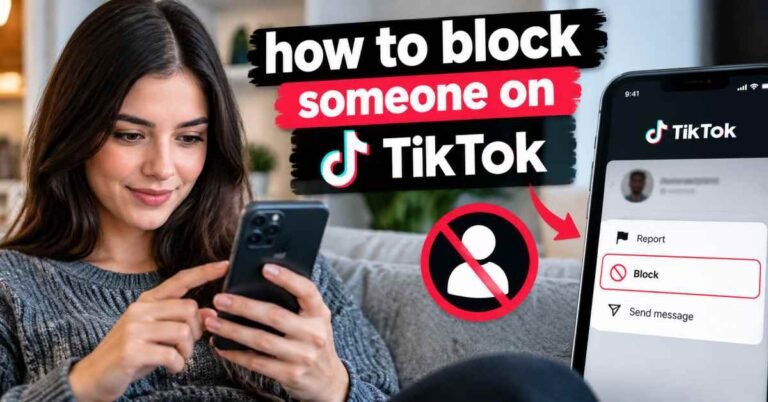
[…] shared spaces, such as certain group interactions or LIVE situations, can work differently. Older guides sometimes describe blocking as complete invisibility in every TikTok feature, so readers should avoid assuming that every shared […]
[…] traditional workflows, maintaining visual consistency across multiple digital touchpoints required strict brand style guides, heavy asset management software, and constant oversight. When an independent creator or small team […]